
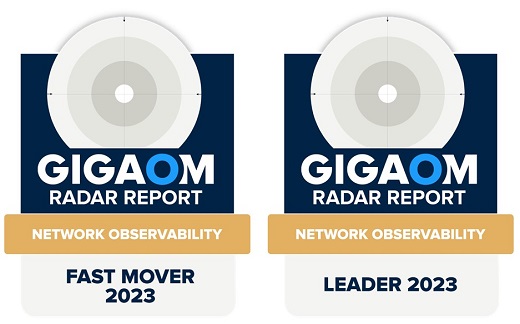
Broadcom has been named the highest-scoring vendor for the third consecutive year in a row in the 2023 Radar Report for Network Observability.
Industry analysts refer to network observability as “a network monitoring system that collects a complete and diverse set of network data to provide deep visibility and actionable insights into the current and future state of a network.”
Additionally, they say that "network observability is a category of platforms and tools that go beyond device-centric network monitoring to provide truly relevant, end-to-end visibility and intelligence for all the traffic in your network, whether on-premises, in the cloud, or anywhere else."
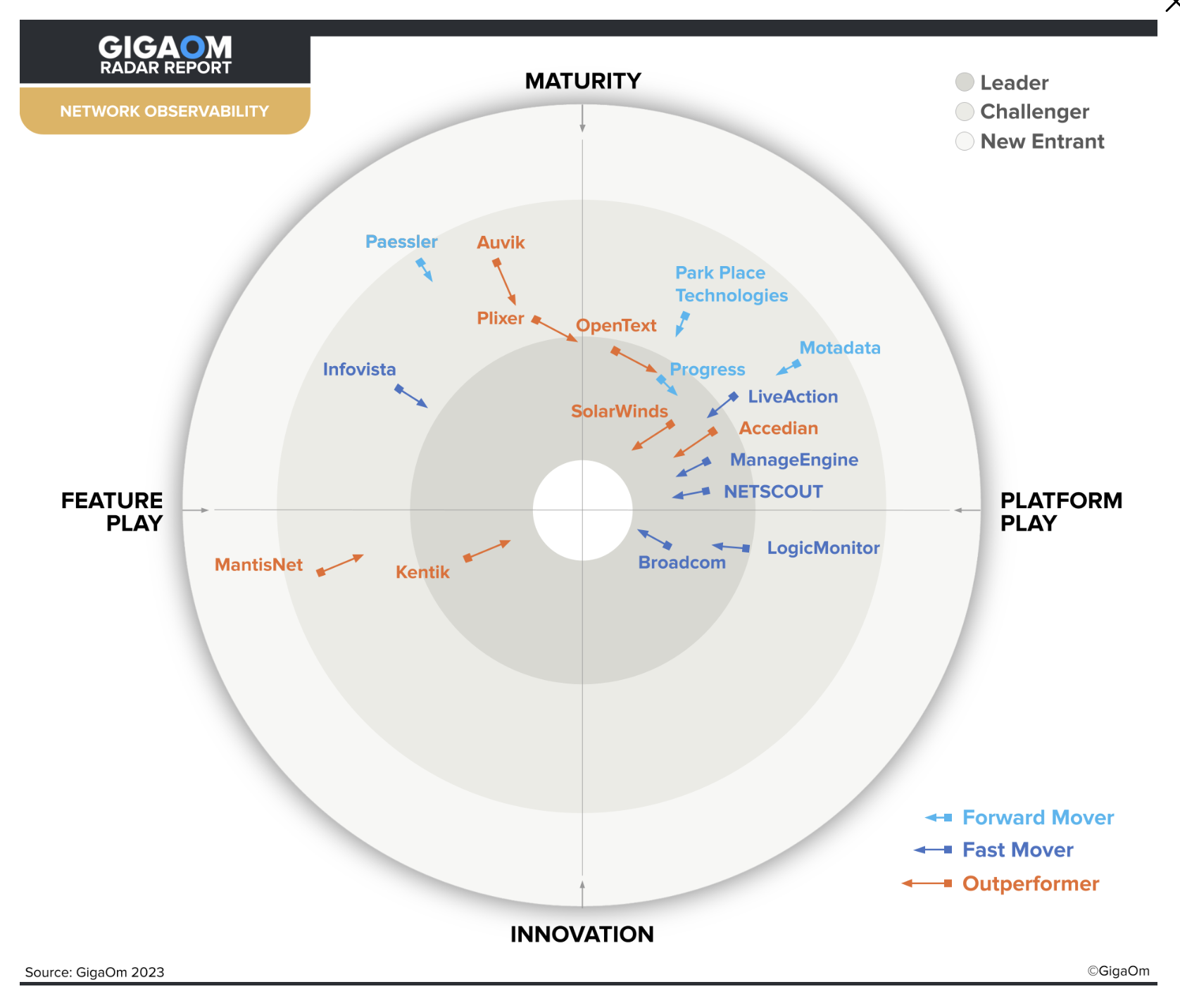
It's really all about the data, what you do with it, and what it does for you. Multi technologies (old and new) via multiple protocols collecting a broad set of network data across multi-vendors is a mandate now for network operations teams.
Precise root cause isolation and remediation recommendations based on all the data available on your networks for analysis is the only way to accurately achieve actionable insights derived from this data. Then, when you extend these industry-leading capabilities beyond the edge of the network, into ISP, cloud, and SaaS environments, you get an award-winning network observability solution.
“We are proud to be recognized, for the third year in a row, as the highest-scoring leader in network observability by GigaOm for pushing the limits of end-user experience network monitoring,” says Serge Lucio, head of Broadcom’s Agile Operations Division. “No other vendor has the depth and breadth of coverage across any network architecture, whether managed or unmanaged, anywhere in the world, to protect our customers' critical business services."
Download your complimentary copy of the GigaOm Radar for Network Observability today and learn how!

Jeremy Rossbach
As the Chief Technical Evangelist for NetOps by Broadcom, Jeremy is passionate about meeting with customers to identify their IT operational challenges and produce solutions that fit their business and network transformation goals. Prior to joining Broadcom, he spent over 15+ years working in IT, across both public...
Other resources you might be interested in

AAI v26.0 - Linux Standalone Upgrade
Learn how to upgrade a standalone AAI installation on Linux from version 24.4.x to 26.0. Find out about updated configuration and log structures.
Automic Automation: Transition to SAP RISE with Confidence
Automic Automation safeguards Clean Core architecture, mitigates SAP RISE migration risks, and unifies enterprise scheduling from mainframe to cloud.
AutoSys Workload Automation: Transition to SAP RISE with Confidence
AutoSys safeguards Clean Core architecture, mitigates SAP RISE migration risks, and unifies enterprise workload scheduling from mainframe to cloud systems.
AppNeta: Manage Alarm Rules
Learn how to create and manage alarm rules in AppNeta. Detect, isolate, and present user-impacting issues to network operations center teams.
Rally Office Hours: October 8, 2026
Find out about a new “my notifications” widget and an enhanced planned/unplanned widget. Hear about diverging axis views and upcoming cycle time widgets.

Going Off-Road: How We Bulletproofed Automic's Zero Downtime Upgrades
To ensure absolute reliability at SaaS scale, Automic Automation recently evolved its ZDU strategy.
Rally Office Hours: October 1, 2026
Explore Rally updates, including end-to-end markdown support, a new defect trend widget, an update dependency widget, and custom view migration status.
Clarity: Design Visual Layouts Using Report Designer
This course teaches you how to create new reports with the Clarity Report Designer.
Rally Office Hours: September 24, 2026
Find out about a new milestone cumulative flow diagram widget and custom view widget capacity. Get tips for handling project name changes in middleware.