
In today's rapidly changing digital landscape, businesses need to transform their operations to stay competitive. For organizations in virtually every industry, digital transformation is no longer optional, but a necessity for survival.
As organizations pursue transformation objectives, teams continue to increase their adoption of new technologies. However, digital transformation is not just about technology implementation. It requires a fundamental shift in the way businesses operate, from processes and workflows to culture and mindset.
It is for these reasons that value stream management (VSM) has emerged as an increasingly vital imperative. VSM enables organizations to use lean and agile methodologies to improve efficiency and productivity, as well as ensure better alignment with customer needs. This enables teams to create more value for their customers, while also reducing costs and increasing reliability.
Why is VSM critical to digital transformation?
Digital transformation involves the integration of digital technologies into all areas of a business, from customer engagement and supply chain management to employee productivity and business intelligence. It requires a deep understanding of how value flows through the organization and where opportunities for improvement exist.
VSM provides a holistic view of the entire value stream, helping business leaders to identify bottlenecks, redundancies, and inefficiencies. By mapping out the value stream, teams can identify areas in which digital technologies can be applied to improve speed, quality, and customer satisfaction. VSM enables organizations to:
- Streamline processes and workflows. VSM helps teams identify and eliminate waste in their processes and workflows, reducing lead times and improving efficiency. By automating manual tasks and eliminating unnecessary steps, teams can free up resources to focus on more value-added activities.
- Identify and prioritize improvement opportunities. VSM enables teams to identify opportunities for improvement and prioritize them based on their impact on the value stream. By focusing on high-impact areas, groups can achieve quick wins and demonstrate the value of digital transformation.
- Improve collaboration and communication. VSM provides a common language and visual representation of the value stream, enabling teams to collaborate and communicate more effectively. By breaking down silos and fostering cross-functional collaboration, teams can improve the flow of value and accelerate their digital transformation.
- Monitor, measure, and optimize performance. VSM enables organizations to monitor and measure the performance of their value streams, providing insights into how they can be improved. By establishing key performance indicators (KPIs) and tracking them over time, teams can continuously improve their processes and workflows and speed digital transformation.
How can Broadcom ValueOps help?
Broadcom ValueOps is a VSM solution that enables organizations to optimize their value streams and drive digital transformation. It provides a comprehensive suite of tools and capabilities for value stream mapping, analysis, optimization, and continuous improvement.
Visualize Value Streams
To enable visualization of value streams, ValueOps typically uses a technique called value stream mapping, which consists of these steps:
- Determine the specific process or set of processes that deliver value to the customer.
- Document the current flow of material and information through the value stream, including all inputs, outputs, and process steps.
- Identify areas of waste and inefficiency in the current value stream, such as bottlenecks, delays, or unnecessary steps.
- Design the future state. Develop a new, optimized value stream that eliminates waste and improves efficiency, based on the analysis of the current state.

Analyze Value Streams
ValueOps enables teams to analyze their value streams, identifying areas in which improvements can be made and prioritizing them based on their relative impact. The solution supports these efforts:
- Identify bottlenecks that constrain the flow of value, causing delays and inefficiencies.
- Measure cycle time to identify areas where improvements can be made to increase efficiency.
- Identify, reduce, and eliminate waste in the value stream.
- Implement improvements to the value stream based on analysis, changing processes or reorganizing teams to optimize the flow of value.


Optimize Value Streams
ValueOps enables organizations to optimize their value streams, reducing lead times, improving quality, and increasing customer satisfaction.
ValueOps incorporates lean principles to eliminate waste and streamline processes. This includes practices such as just-in-time production, continuous flow, and pull-based systems. Broadcom uses agile methodologies to increase flexibility and responsiveness in the value stream. For example, the solution supports such practices as iterative development, continuous improvement, and cross-functional collaboration.
Continuously Improve Value Streams
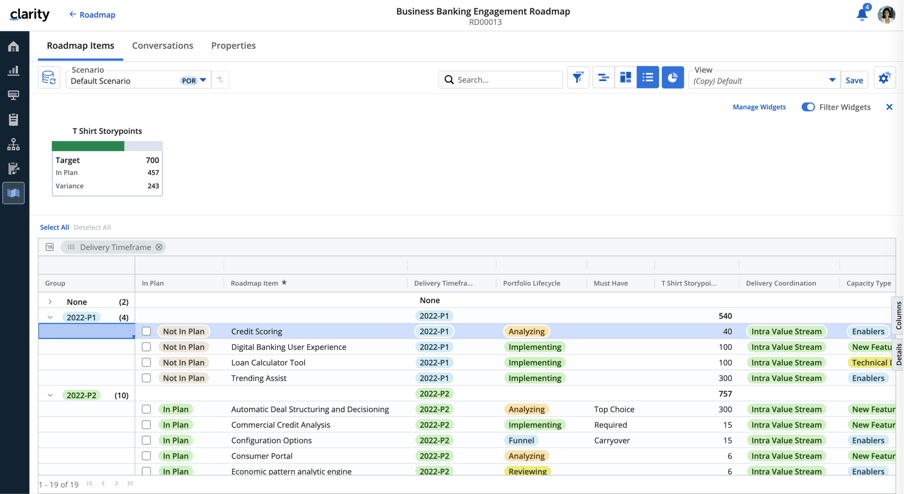
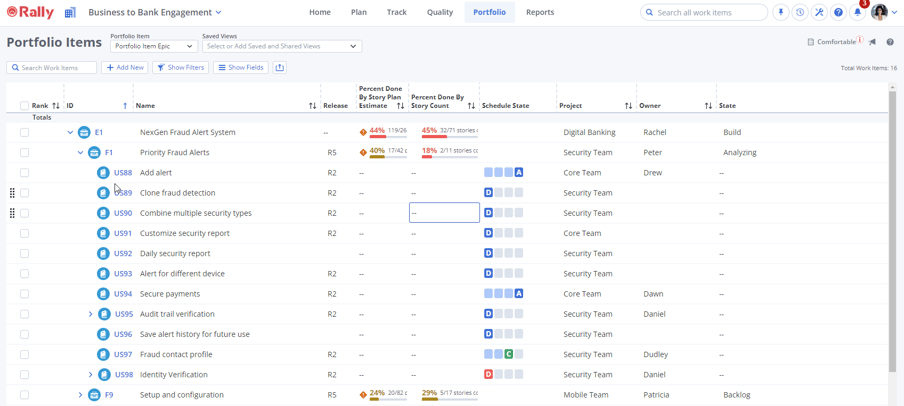
ValueOps provides a platform for continuous improvement, enabling organizations to monitor and measure the performance of their value streams and drive digital transformation. With the solution, teams can:
- Improve visibility, transparency, and alignment with top-level business objectives to speed up innovation and adaptation.
- Establish a unified platform, while ensuring individual team members gain personalized, real-time, and data-driven insights.
- More effectively plan, prioritize, manage, track, and continuously improve their work, so they can more quickly and efficiently deliver the quality and value that their customers need.

Conclusion
In conclusion, VSM is critical to digital transformation because it provides a framework for organizations to optimize their operations and more quickly and efficiently deliver value to their customers. By visualizing the flow of work, VSM enables teams to identify areas for improvement and prioritize their efforts. VSM can fuel significant advancements in agile, IT delivery, governance, and infrastructure teams, enhancing their ability to deliver value in a digital world. By adopting a VSM approach, organizations can position themselves for success in a rapidly evolving digital landscape.

Fernando Nogueras Alvarez
Fernando has more than 25 years of experience in software leadership positions within companies like Broadcom, CA Technologies, and Platinum Technologies. Throughout his career, Fernando has had a strong focus on the customer, and maximizing their value and outcomes. He has successfully supported digital...
Other resources you might be interested in
Rally Office Hours: October 8, 2026
Find out about a new “my notifications” widget and an enhanced planned/unplanned widget. Hear about diverging axis views and upcoming cycle time widgets.

Going Off-Road: How We Bulletproofed Automic's Zero Downtime Upgrades
To ensure absolute reliability at SaaS scale, Automic Automation recently evolved its ZDU strategy.
Rally Office Hours: October 1, 2026
Explore Rally updates, including end-to-end markdown support, a new defect trend widget, an update dependency widget, and custom view migration status.

Clarity: Design Visual Layouts Using Report Designer
This course teaches you how to create new reports with the Clarity Report Designer.
Rally Office Hours: September 24, 2026
Find out about a new milestone cumulative flow diagram widget and custom view widget capacity. Get tips for handling project name changes in middleware.
Rally Office Hours: September 17, 2026
Explore Rally's new delivery confidence feature for portfolio items, hear custom view migration updates, and get expert answers to Q&A.
Rally Office Hours: September 10, 2026
On the latest Rally Office Hours, learn more about new burn-down widgets, custom page migration updates, technical Q&A, and Broadcom community events.
Rally Office Hours: September 3, 2026
Review the latest Rally Office Hours summary covering the MCP Server upgrade, custom page migration updates, API tooling, Q&A, and upcoming event news.
AAI v26.0 Container Deployment
This foundational training course focuses on modernizing enterprise workload analytics across OpenShift and Kubernetes environments.